
NYC to Tokyo Jet Lag: How Long It Lasts and How to Beat It
Why this route is different from every other one on this list
Most eastbound routes give you one or two high-leverage days where light timing does most of the work. At thirteen hours, each individual day moves the needle less. Progress comes from stacking small wins across pre-flight days, the flight itself, and the first four nights in Tokyo.
Afternoon arrivals are an underused advantage on this route. A 2 p.m. landing gives you a controlled half-day to get outside, eat on local time, and reach a reasonable bedtime without the pressure of a full morning you are not ready for. Wasting that window by going straight to the hotel is one of the most common mistakes.
Your NYC → Tokyo jet lag plan
How It Works
- Begin the Tokyo shift from New York. Two days out, you'll push bedtime earlier, from around 2 a.m. down to 1 a.m., and keep mornings a bit dimmer than usual. That's your head start on an 11-hour gap that no single flight can close on its own.
- Seek light in the New York evening. From 9 p.m. to midnight on pre-flight days, you'll get bright light when most people are winding down. It signals to your body that daytime runs late, which sets you up for Tokyo's morning rhythm.
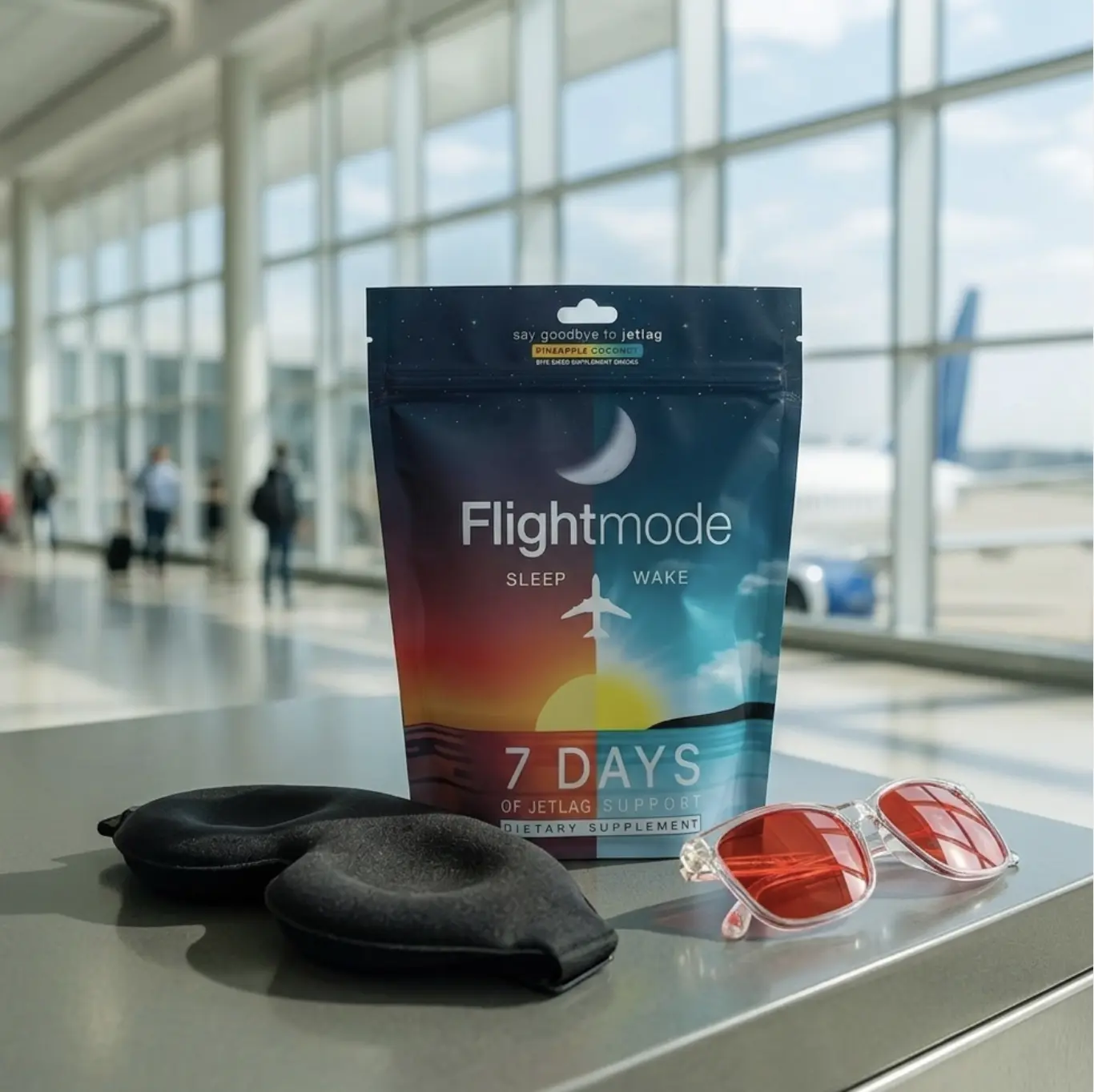
- Split the long haul to Tokyo. Leaving at 10:30 a.m. and landing at 1:55 p.m. the next day, you won't sleep the whole way. You'll take Flightmode Sleep after takeoff for a solid stretch, stay up through the middle, then rest again before landing so you arrive tired but not destroyed.
- Use Tokyo daylight on arrival. Once you land, get outside from 2 p.m. to 7 p.m. on day one, use caffeine in the morning, and take Flightmode Sleep around 1 a.m. By the second morning you're on a Tokyo schedule, which is a real win after an 11-hour clock jump.
- Flightmode Sleep and Wake carry the long shift. Sleep covers the hard bedtime hours when your body still thinks it's afternoon in New York, and Wake handles the caffeine cues so you don't drift back.
Times shown in departure airport time.
Your Jet Lag Plan, in a Gummy
Thirteen hours is where the Travel Planner stops being a convenience. The window where light helps versus hurts shifts every day on a route this size, and getting it wrong sets you back rather than leaving you flat.
- Sleep gummy + Wake gummy in every kit
- AI planner timed to NYC → Tokyo
- Melatonin-free, no morning grogginess
- 30-day First Flight guarantee
What Asia-bound travelers say
"No jet lag flying solo. Flying over and flying back I had absolutely no jet lag. Everyone else on the plane was feeling the effects — I was perfectly fine."
"No more 3am wakeups. Usually I wake at odd hours for a week after a big time change. With Flightmode, I slept through the night faster."
"I was full of energy and started my trip immediately. Do not waste your first day in a new time zone dealing with jet lag."
Frequently asked questions
How long does jet lag last flying from New York to Tokyo?
Nine to ten days untreated, which is longer than most trips to Japan. Four to five with a proper pre-shift.
Is Tokyo to New York easier?
Considerably. Westbound from Tokyo is an eleven hour delay, and delays run roughly a third faster. Expect five or six days coming home against nine going out.
Should I sleep on the flight to Tokyo?
Some of it. Sleeping the whole fourteen hours leaves you wide awake at 2am Tokyo. Sleep the middle six or seven hours and stay awake at both ends.
Is a stopover better than the nonstop?
For jet lag, marginally. A stop in the right direction gives you a light exposure opportunity mid-journey. For everything else, the nonstop wins.
When does jet lag peak on this route?
Day two or three, not arrival day. Adrenaline carries most people through the first evening.