
SFO to Tokyo Jet Lag: Why the Direction Reverses
Why the standard advice fails here
Going to bed two hours earlier each night for a week before a Tokyo trip feels productive. On this route it actively works against you, pushing your clock forward when it needs to delay. By the time you board, you are fighting both the time gap and your own preparation.
Bay Area tech workers on this route often report the worst jet lag of any trip they take, despite being health-conscious and well-traveled. The pattern is consistent: they followed eastbound advice on a route that needed the opposite, and spent days three through five feeling like they were living in two time zones at once.
Your SFO → Tokyo jet lag plan
How It Works
- Push your clock later from San Francisco. Two days before you fly, you'll stay up later, targeting around 2 a.m. bedtimes, and keep SF mornings a little dim. On this route your body needs to delay, not advance, and staying up late at home is how you start.
- Seek light in the SF evening. From 9 p.m. to 1 a.m. on pre-flight nights, you'll get bright light when you'd normally wind down. It tells your body daytime runs late, which lines you up with Tokyo evenings.
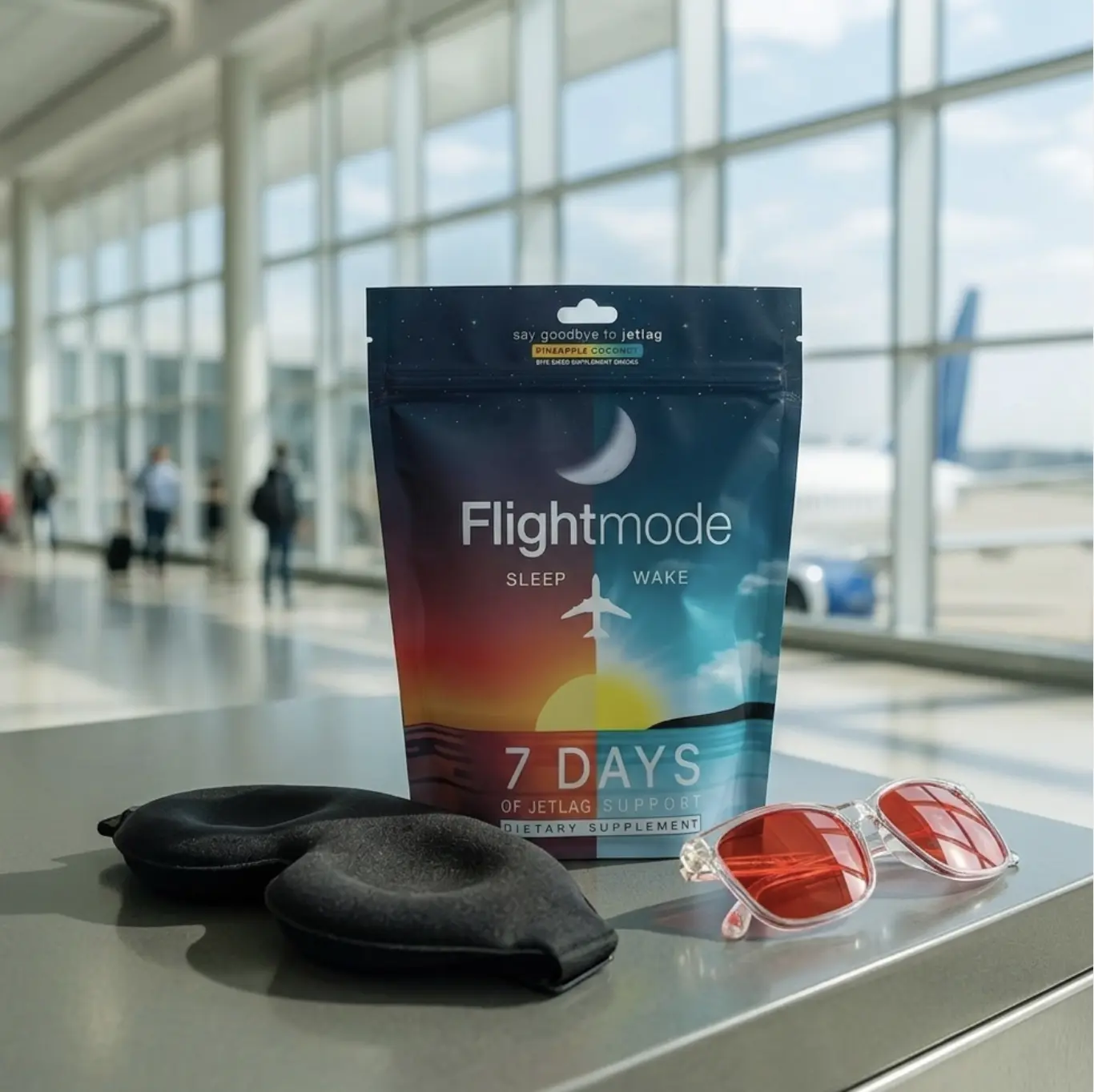
- Use the midday flight to Tokyo. Departing at 11:40 a.m. and landing at 3 p.m., you'll take Flightmode Sleep after takeoff, rest mid-flight if you need it, then stay awake for landing. You'll step off in Tokyo ready to use the afternoon light.
- Lock in Tokyo time on landing. Get outside from 4 p.m. to 10 p.m. on day one and take Flightmode Sleep around 1 a.m. By day two you're waking on Tokyo time after an 8-hour shift.
- Flightmode Sleep and Wake keep the delay on track. Sleep helps you hold the later bedtime, and Wake covers caffeine when SF hours try to pull you back.
Times shown in departure airport time.
Your Jet Lag Plan, in a Gummy
The Travel Planner gets the direction right, which on this route is the entire game. Everything downstream of that decision depends on it.
- Sleep gummy + Wake gummy in every kit
- AI planner timed to SFO → Tokyo
- Melatonin-free, no morning grogginess
- 30-day First Flight guarantee
What Asia-bound travelers say
"No jet lag flying solo. Flying over and flying back I had absolutely no jet lag. Everyone else on the plane was feeling the effects — I was perfectly fine."
"No more 3am wakeups. Usually I wake at odd hours for a week after a big time change. With Flightmode, I slept through the night faster."
"I was full of energy and started my trip immediately. Do not waste your first day in a new time zone dealing with jet lag."
Frequently asked questions
Is SFO to Tokyo eastbound or westbound for jet lag?
Your body treats it as an eight hour delay. Westbound in every practical sense.
Should I go to bed earlier before flying to Tokyo?
No. Later. This is the most common mistake Bay Area travelers make on this route.
How long does jet lag last flying from SFO to Tokyo?
Nine to ten days untreated, four to five with a delay-direction pre-shift.
Does morning light in Tokyo help?
Very little on days one and two. Afternoon and evening light is what moves your clock.
Is the return to San Francisco easier?
It is an eight hour advance coming home, which is the harder direction. Many people find the return worse than the outbound on this pairing.